Avoiding “Watermelon SLAs”: How to Get the Most Value from Your Managed Services Agreement

Updated: Jun 10

After leading global infrastructure and operations teams and managing large-scale managed service agreements across complex environments, I’ve seen both the successes and the failures of MSP relationships.
Managed Services Providers (MSPs) can be powerful partners in running and scaling IT operations. Done well, a managed services relationship improves reliability, accelerates modernization, and reduces operational burden.
Done poorly, it becomes expensive staff augmentation with limited accountability.
The difference rarely comes down to the contract itself. It comes down to how the partnership is structured, governed, and incentivized.
Organizations that get the most value from their Managed Services Agreement focus on five key principles.
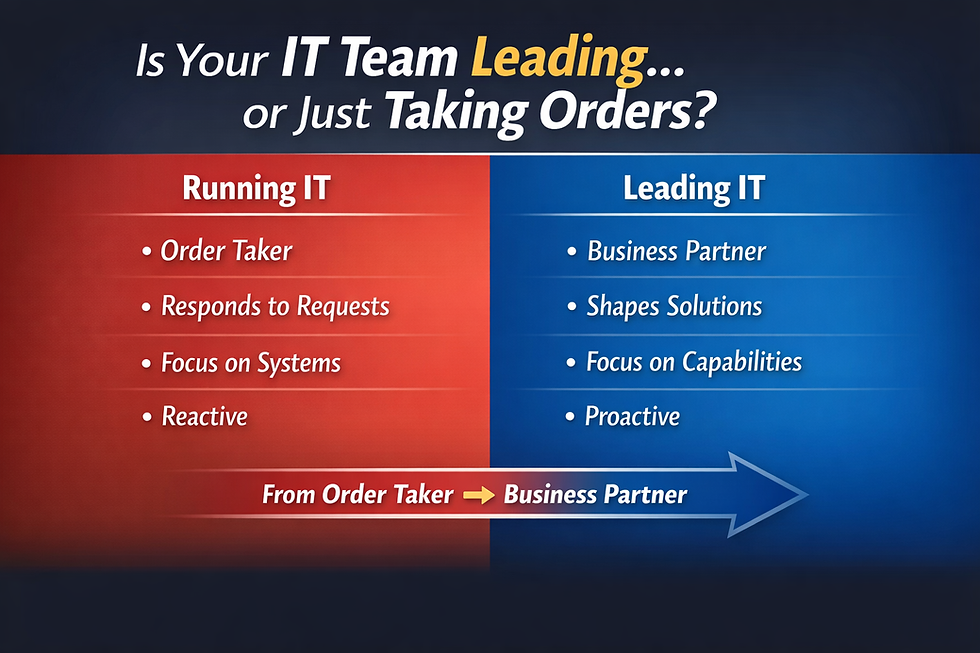
1. Treat the MSP as a Strategic Partner — Not Just a Vendor
The strongest managed services relationships operate collaboratively rather than transactionally. Too often, organizations push everything to the MSP and disengage internally. This creates a transactional relationship rather than a collaborative one. Instead, organizations should:
Share strategic priorities and upcoming initiatives
Include MSP leadership in technology planning discussions
Align service delivery with broader business objectives
Establish executive-level relationships on both sides
Your MSP should understand where the company is going, not just what tickets need to be closed today. When they understand the bigger picture, they can proactively recommend improvements rather than simply reacting to issues.
2. Avoid “Watermelon SLAs / Accountability
Service Level Agreements (SLAs) are not just contract language — they are operational commitments.
Organizations should actively monitor their Managed Services SLAs to ensure performance measures reflect both operational effectiveness and the actual user experience. Leaders should monitor:
Incident response times
Resolution times
System availability
Change management success rates
Customer satisfaction metrics
Leaders should also watch for what many IT organizations refer to as “Watermelon SLAs.” These are metrics that appear green on the dashboard but red in reality. On paper, the provider is hitting the numbers. In reality, the user experience may still be poor.
For example:
Tickets are technically resolved within SLA but bounce between teams for days before resolution.
Incidents are closed quickly but recur repeatedly due to unresolved root causes.
Metrics look strong, yet business users still report persistent service issues.
This happens when providers optimize for meeting the letter of the SLA rather than the spirit of service delivery.
Often, leadership doesn’t recognize the issue until business users begin questioning why service quality feels worse despite healthy operational reporting. If you’ve managed large MSP relationships, you’ve probably seen this phenomenon firsthand.
Good governance focuses not just on the metrics themselves, but on the actual outcomes and business experience behind them. At the same time, accountability must work both ways.
Internal teams must:
Provide timely access and approvals
Maintain clear ownership of responsibilities
Avoid scope creep outside the agreement
A healthy partnership balances accountability with collaboration.
3. Build a Strong Governance Structure
Successful managed services engagements require consistent operational oversight and clear accountability structures. Without structured oversight, performance issues can go unnoticed and the relationship slowly drifts away from its intended value.
Effective governance typically includes:
Operational reviews (weekly or bi-weekly)
Service performance reviews (monthly)
Executive steering committees (quarterly)
These meetings should review:
SLA performance
Incident trends
Root cause analysis
Continuous improvement initiatives
Strategic initiatives and upcoming changes
These review structures help surface problems early and keep both organizations aligned on priorities and performance expectations. In large enterprise environments, governance is often the single biggest factor that determines whether a managed services relationship succeeds or slowly deteriorates.
Most MSP relationships start with operational support and basic SLA management. The stronger relationships mature beyond ticket metrics and transactional delivery into outcome-based partnerships aligned to business performance rather than simply operational reporting.

That maturity rarely happens on its own. It requires governance structures, aligned incentives, and active leadership engagement from both sides.
4. Align Incentives Around Continuous Improvement
One of the biggest missed opportunities in managed services relationships is failing to incentivize improvement. Many agreements unintentionally reward the MSP for maintaining the status quo rather than improving the environment.
Smart organizations build incentives that reward:
Automation initiatives
Reduction in recurring incidents
Improved service metrics
Infrastructure modernization
Cost optimization
When the provider benefits from improving the environment, innovation naturally increases. The goal should be mutual success, not simply meeting minimum contractual obligations.
5. Maintain Internal Ownership of Technology Strategy
Managed services should never replace internal technology leadership. Organizations that rely entirely on their MSP for strategy often lose control of their technology roadmap.
Internal leadership should always maintain ownership of:
Enterprise architecture
Technology strategy
Vendor management
Risk and security governance
Major platform decisions
Your MSP should execute and contribute expertise, but the direction of technology should remain inside the organization.
Final Thought
A Managed Services Agreement is not a “set it and forget it” arrangement.
Organizations that get the most value from MSP relationships stay actively engaged in the relationship rather than treating the agreement as outsourced operations. When structured correctly, managed services can deliver operational excellence and strategic value. When left unmanaged, they simply become another outsourced cost center.
The difference is leadership, governance, and a relationship focused on operational improvement rather than contractual minimums.
Many organizations assume value will naturally follow once the contract is signed. In reality, the difference between a high-performing partnership and an expensive outsourcing arrangement usually comes down to leadership oversight and disciplined governance.


Comments